PID

Photo Imageable Dielectric
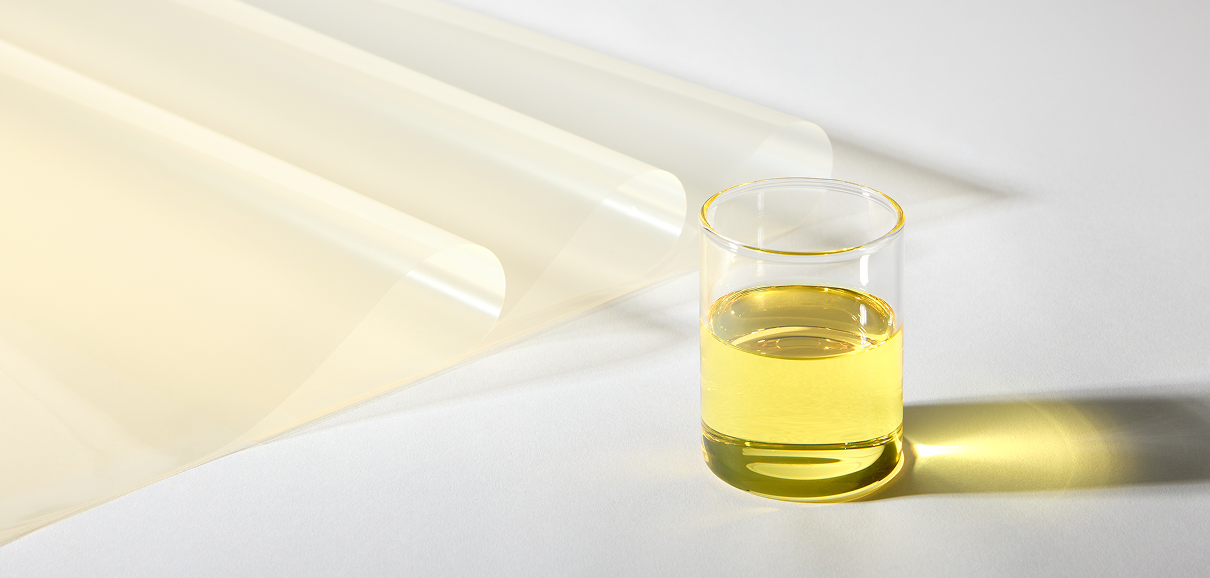
PID Photo Imageable Dielectric  LG Chem Advanced Materials High‑performance photo‑imageable insulation material for forming micro‑circuit patterns in advanced semiconductor packages
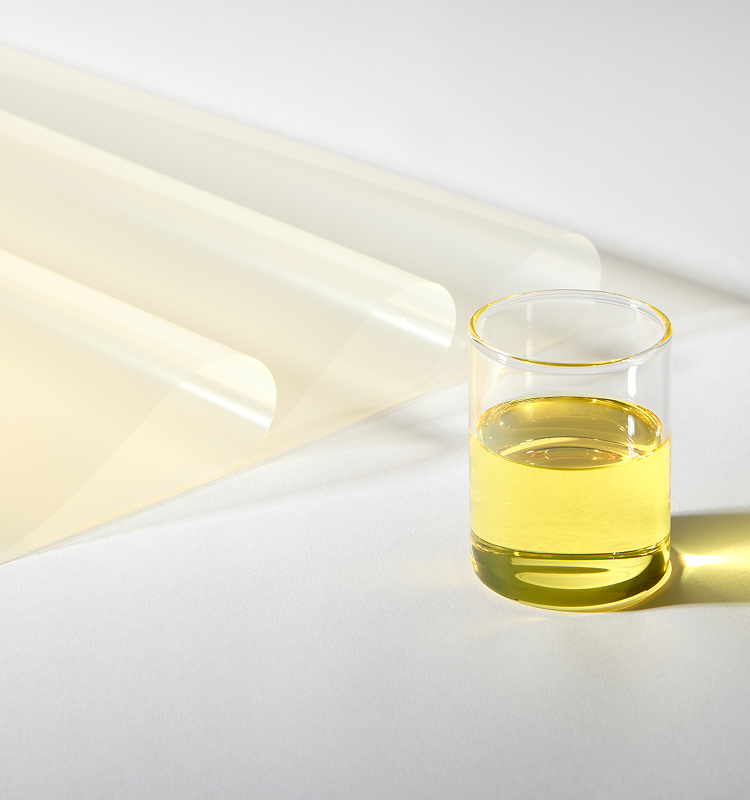

High‑performance photo‑imageable insulation material for forming micro‑circuit patterns in advanced semiconductor packages

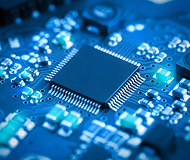
PID(Photo Imageable Dielectric) is a photosensitive insulating material used to form the fine circuit patterns that connect semiconductor chips to substrates in advanced semiconductor packages. It enhances package performance and reliability by enabling ultra‑fine circuit formation and ensuring stable electrical insulation.

As advances in AI increase the demand for higher‑performance semiconductors, LG Chem delivers PID materials featuring high‑resolution patterning and exceptional reliability essential for ultra‑fine circuit fabrication. Through an extensive lineup of liquid and film‑type products, we provide optimized material solutions tailored to customers’ process conditions and technical challenges.

Features

High Reliability

High‑resolution

Low‑temperature Curing

Eco‑friendly (PFAS Free)

Applications

Functions and Structure

Product Functions and Structure

• High‑resolution performance and high reliability enabled by proprietary material design
• Stable low‑temperature curing with low shrinkage and low moisture absorption for improved process stability and reliability
• Eco‑friendly formulation free of PFAS and organic solvents such as NMP and toluene
• Film‑type PID supporting fine‑line circuitry on large‑area panels and substrates

Product Group

    Advanced Adhesive Products and Their Functions

      Product Classification

      Product Classification :Category ,Grade ,Features ,Applications ,Download
      Category Grade Features Applications Download
      PID
      Positive Type (Liquid)
      • High resolution and excellent adhesion to substrates
      • Outstanding thermal, mechanical, and electrical properties
      • Advantageous for multilayer circuits and high-density packaging due to low shrinkage characteristics
      • FO‑WLP / PLP (PMIC, Mobile AP)
      • 2.xD (AI accelerators)
      • Dielectric material for glass substrates
      PID
      Negative Type (Liquid)
      • High reliability, high resolution, and strong adhesion to substrates
      • Low dielectric constant (Low Dk) and low dissipation factor (Low Df) for reduced crosstalk and leakage during high‑speed signal transmission
      • FO‑WLP / PLP (PMIC, Mobile AP)
      • 2.xD (AI accelerators)
      • Dielectric material for glass substrates
      PID
      Negative Type (Film)
      • Applicable to film lamination processes
      • Applicable to large‑area panels
      • FO‑WLP / PLP (PMIC, Mobile AP)
      • FC-BGA / FC-CSP
      • 2.xD (AI accelerators)
      • Dielectric material for glass substrates

      FAQ

      • PID is a photo-imageable dielectric material that allows direct formation of fine patterns through exposure and development using photolithography. It is typically based on polyimide, epoxy, or acrylic resins and is widely used as an insulating layer in semiconductor packaging, including redistribution layers (RDL).
      • PID provides electrical insulation within semiconductor packages, preventing short circuits between copper interconnects. It enables the formation of vias and fine line/space patterns for high-density wiring and also serves as a mechanical protection layer to improve package reliability and integration density.
      • PID is primarily used in back-end semiconductor processes (packaging), including Fan-Out WLP, Fan-In WLP, Flip-Chip, and 2.5D/3D packaging. It is mainly applied as an insulating layer in RDL and via formation processes.
      • PID typically supports line/space resolution of approximately 2–10 μm and via openings of about 5–20 μm. High-resolution PID materials can achieve fine patterns below 2 μm.
      • Since PID forms fine patterns through photolithography, its resolution and process precision are directly related to package integration density. High-resolution PID is essential for high-layer-count RDL, Fan-Out, and AI/HPC packages.
      • Low-temperature curable PID can be cured below 200 °C, protecting heat-sensitive devices. It also reduces warpage and mitigates reliability issues caused by CTE mismatch, making it suitable for Fan-Out and large-area panel processes.
      • Key characteristics include high-resolution patternability, stable electrical insulation, thermal and mechanical stability, crack resistance, and strong adhesion to copper and substrates.
      • Important factors include target pattern resolution, curing temperature and process window, adhesion to copper and substrates, package reliability, mass-production yield stability, and compatibility with existing packaging processes.
      • Differentiating factors include high-resolution capability, combined low-temperature curing and high thermal stability, low-stress and crack resistance, excellent copper adhesion, low dielectric properties, and robust process stability.
      • Film-type PID offers excellent thickness uniformity, reduced material waste, and advantages in large-area panel processing. It also improves yield, reduces cleanroom contamination, and enables easier handling and storage compared to liquid PID.
      • Since PID directly contacts copper wiring and seed layers, insufficient adhesion may result in delamination, open failures, and reduced reliability. Excellent copper adhesion is therefore critical for RDL process stability, yield improvement, and long-term reliability.

      alert

      alert

      1:1 Inquiries